
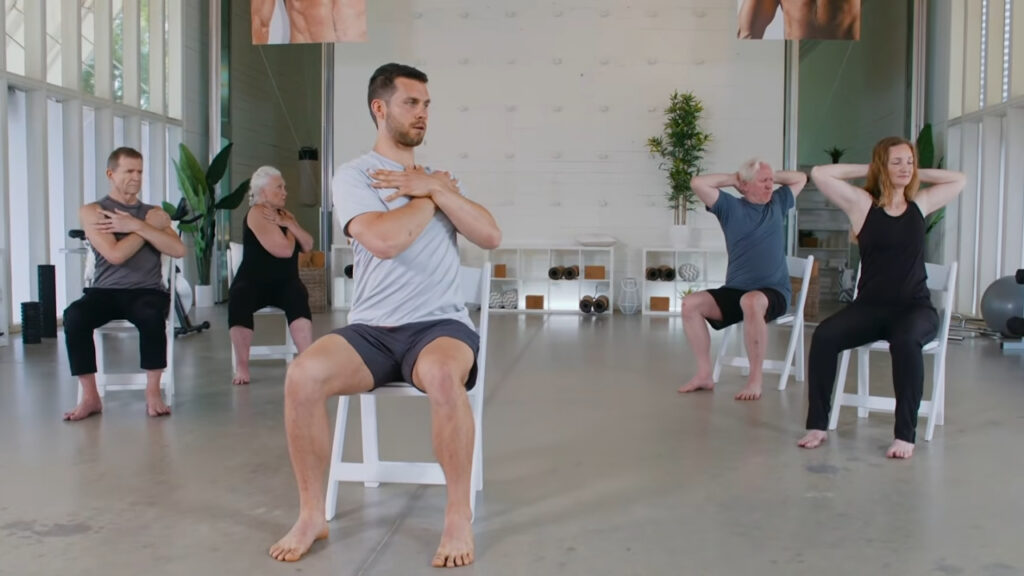
I have taught enough classes to know that “I am not flexible enough for yoga” is one of the most common reasons people give for avoiding the exact thing that could help. A close second is “I cannot get down on the floor anymore.”
Chair yoga answers that second worry directly, and plenty of people still treat it as the lesser option, the class you take when the real one is out of reach.
I disagree. A seated class keeps the breath, the attention, and the held postures that make yoga what it is. The floor was never the point.
Chair Yoga Is Younger Than the Mat but Not New
View this post on Instagram
Floor practice has centuries of history behind it, while chair yoga has about four decades. According to an Associated Press report from June 2025, yoga teacher Lakshmi Voelker began adapting poses for a chair in 1982 after watching a student in her 30s with arthritis struggle to get down to the floor in a regular class.
Notice the age. The student who started it all was not an elderly beginner but a young woman whose joints made the floor a problem.
Did you know? Chairs were part of yoga practice before chair yoga had a name. Teachers in the Iyengar tradition have long used a chair to support poses such as shoulder stand, so students can work with correct alignment.
Support, in other words, has been part of serious yoga for a long time.
What Makes a Class Yoga, With or Without a Mat
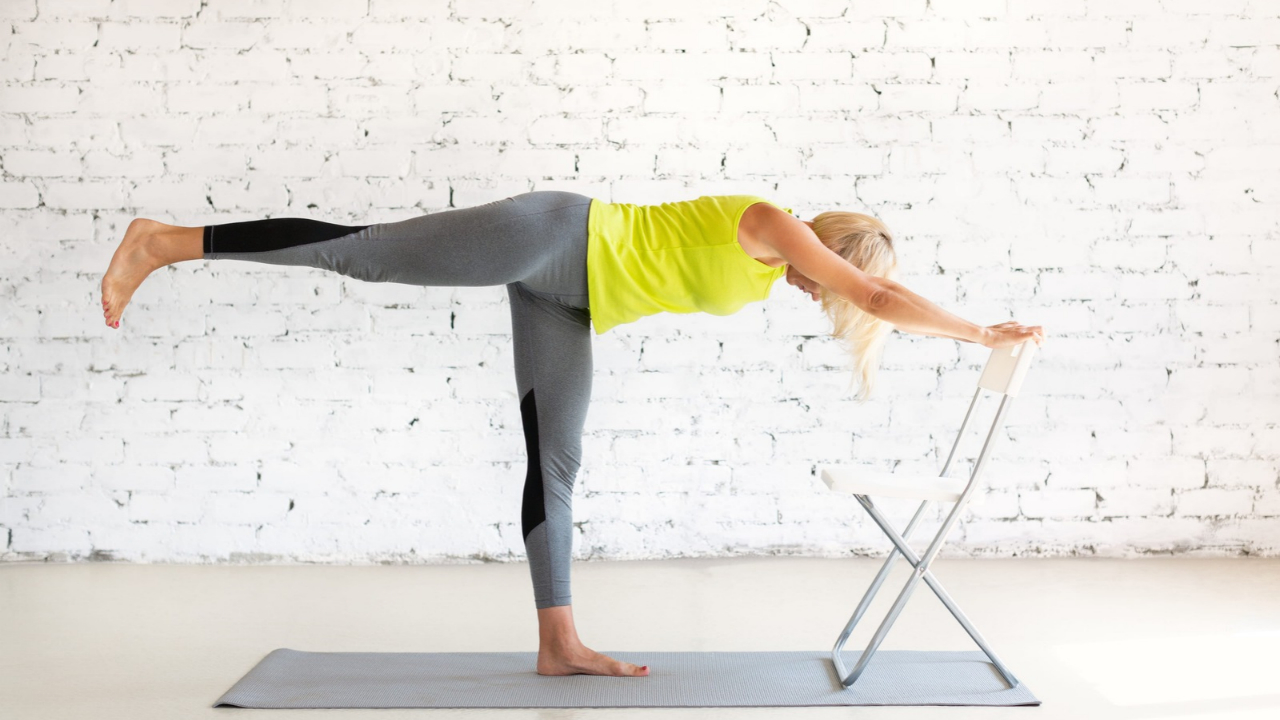
Yoga taught me to pay attention to my breath and to stay in a position long enough to notice what was actually happening in my body. None of that requires lying on a mat. A chair changes your base of support, and it leaves the practice itself intact.
In a well-taught chair class, three things stay exactly the same.
- Breath leads the movement, so you inhale to lengthen and exhale to twist or fold.
- You hold postures for several breaths instead of rushing through repetitions.
- Attention stays on alignment, such as where the spine is and which side of the waist is working.
A seated twist done with a long spine and slow breathing asks more of you than a sloppy one on the floor. I would take the first version every time.
What the Research Shows So Far
Chair yoga has a small but genuine body of research behind it. The studies below are worth knowing, along with their limits.
| Study | Who took part | Main finding |
| Florida Atlantic University trial, 2017 | 131 older adults with hip, knee, ankle, or foot osteoarthritis | Two 45-minute chair sessions a week for 8 weeks reduced pain more than health education, and less pain interference lasted about three months |
| Review in Age and Ageing, 2016 | 307 people aged 60 and older across six trials | Yoga produced small gains in balance and medium gains in mobility |
The osteoarthritis trial was funded by the National Institutes of Health and compared chair yoga with a health education class. The review covered yoga for older adults in general rather than chair classes alone, and its authors said more research is needed to show whether those gains reduce falls.
Why the Floor Is a Bigger Barrier Than It Looks
Getting down to a mat and back up again is a strength and balance test in its own right. For many people, that transition worries them more than any pose.
The worry is reasonable. According to the Centers for Disease Control and Prevention, about one in four adults aged 65 and older report a fall each year, which is more than 14 million people. The agency also reports that the fall death rate among older adults rose 21% between 2018 and 2024, after adjusting for age.
Falls are the leading cause of injury in adults aged 65 years or older. This JAMA Patient Page describes risk of falls in older adults and fall prevention recommendations from the US Preventive Services Task Force. https://t.co/DlKpBcSTMQ https://t.co/2jnYKSG3h4
— JAMA (@JAMA_current) July 4, 2024
Falls are the leading cause of both fatal and nonfatal injuries among Americans aged 65 and older, according to the CDC.
A class that keeps someone seated or holding a sturdy chair takes away the riskiest moment and leaves the rest of the practice in place. That is a design decision, not a shortcut.
The Reformer Taught Me Support Is Not Cheating
Working in a Reformer studio changed how I think about assistance. On the Reformer, the springs can support you through a movement, and a box on the carriage or a shorter range can turn an impossible exercise into a useful one. Nobody walks out of those classes saying they did not do real Pilates.
Studio work also showed me why some exercises feel harder on the mat than on the machine, because the floor offers nothing except body weight. I have explained how the Reformer carriage and springs work in an earlier piece.
A chair does for yoga what springs do for Pilates. It changes how much help you get. Breath, control, and attention still have to come from you, and a seated forward fold held for five slow breaths will make that very clear.
Who Chair Yoga Suits, and Who It Is Not Only For
Harvard Health Publishing wrote in February 2025 that anyone can try chair yoga, and that it particularly helps people with balance problems or difficulty getting up from the floor. In practice, chair classes work well for a wider group than the stereotype suggests.
- People with arthritis or stiff hips and knees.
- Anyone recovering from surgery, once a doctor has cleared them to exercise.
- Older adults who want balance work with a steady hand hold.
- Office workers who sit for hours and want to move at their desk.
- Complete beginners who feel nervous walking into a mat class.
The AP report also noted that fewer men turn up to these classes, which matches yoga generally.
Where Chair Yoga Falls Short
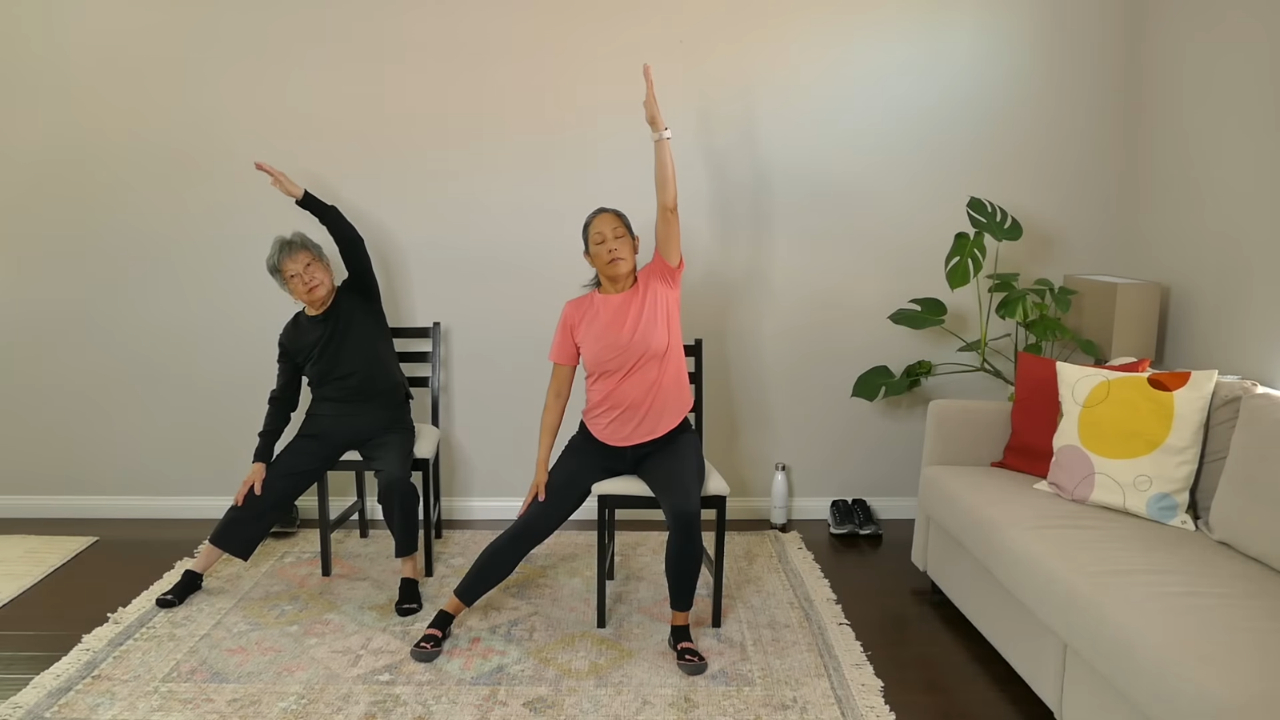
Honesty matters more to me than hype, so here is the limit. Chair yoga will not cover everything a body needs on its own.
The CDC physical activity guidelines for adults 65 and older call for at least 150 minutes of moderate aerobic activity each week, muscle-strengthening work on at least two days, and activities that improve balance.
A gentle seated class mostly helps with the last one and with mobility. You still need walking, cycling, or another way to raise your heart rate.
Safety still matters too. The National Center for Complementary and Integrative Health notes that adults over 65 have a higher rate of yoga injuries treated in emergency departments, and that learning on your own has been linked to more risk. A qualified teacher who can modify poses is worth finding.
How to Get the Most From Your First Chair Class
A chair class is easy to start and surprisingly easy to do badly. A few details make the difference between a nice stretch and a real practice.
- Use a sturdy chair without arms or wheels, and set it against a wall or on a mat so it cannot slide.
- Talk to your doctor first if you have back, hip, or shoulder problems or recent surgery, as Harvard Health advises.
- Tell the teacher about old knee or hip injuries, glaucoma, or high blood pressure before class starts.
- Hold each pose for three to five breaths, and keep the movement inside a range that feels like work rather than pain.
Try the standing poses with one hand on the chair back once you feel steady. Balance is a skill, and it responds to regular practice far better than to one heroic session.
A Chair Class Deserves the Same Respect as a Mat Class
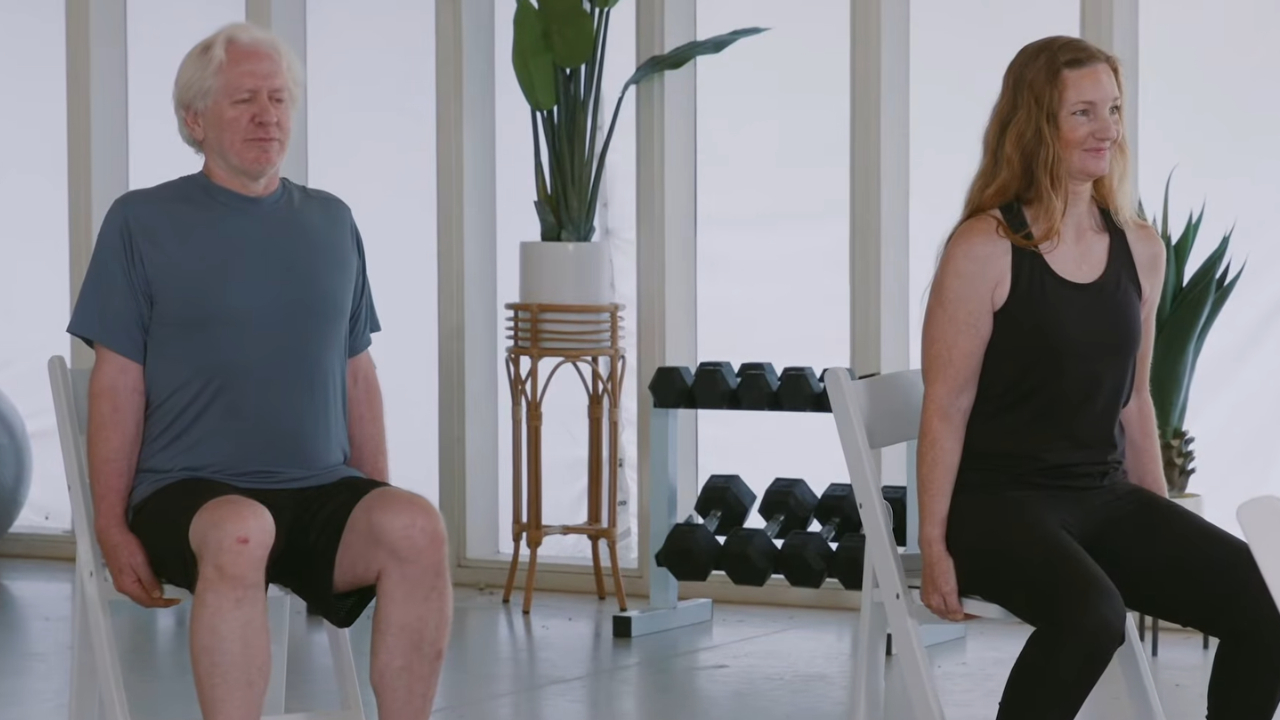
Lakshmi Voelker started adapting poses in 1982 for one student who could not get to the floor.
Four decades later, a federally funded trial and a published review suggest that chair yoga can ease arthritis pain and that yoga can improve balance and mobility in older adults, even if the research is still small.
If a class keeps the breath, the held postures, and the attention, it is yoga, whatever you happen to be sitting on. So if the floor is the thing stopping you, find a qualified teacher who runs a chair class, bring a sturdy chair, and give it eight weeks before deciding what you think.