
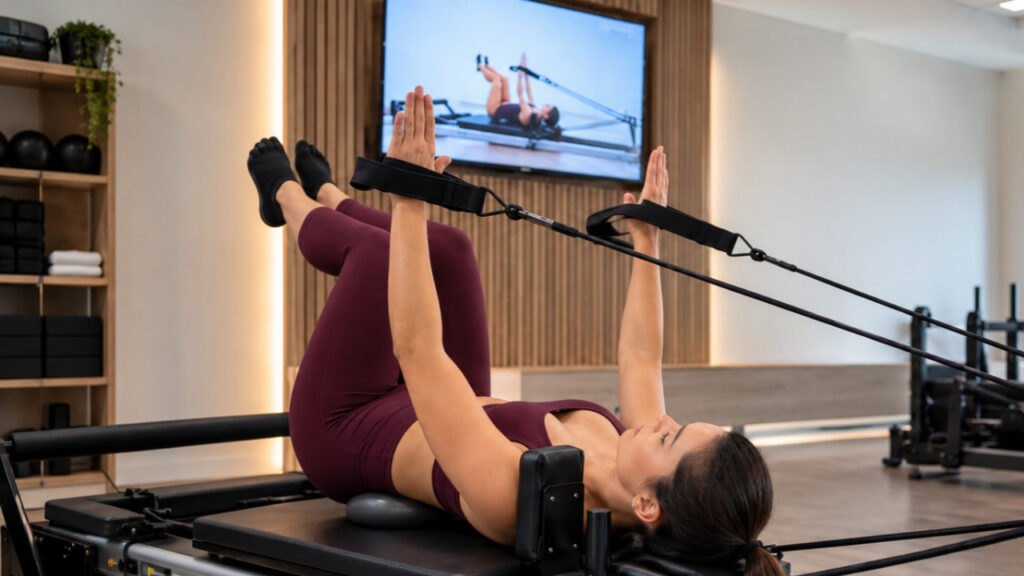
Picture a Reformer class where the person counting you through footwork is huge, perfectly lit, and unable to see you. A growing number of studios run every class that way, with pre-recorded video and no instructor walking between the machines.
The Australian chain Pronto Pilates brought the format to Texas in early 2026, with classes advertised from $5.
I worked in a Reformer studio, so my first reaction was suspicion. My second was curiosity, because cheaper access to the Reformer is a fair goal. What matters is what you give up when nobody in the room can see you.
How a Screen-Led Reformer Class Works
Instructors design and film each class in advance, and a large screen plays it on a fixed schedule while members follow along. Yahoo Lifestyle Australia reported in October 2024 that Pronto classes run with no instructor present to correct form, and the Guardian covered the same teacher-free trend in Australian studios later that month.
View this post on Instagram
According to their own websites, most of these studios share a few features.
- New members must take an induction first, about 15 minutes at Reformer Space in Melbourne and 40 minutes at Pronto in the US.
- At Reformer Space, the video shows an easier and a harder option for each exercise.
- Members unlock the door through an app, and classes run from early morning until late evening.
From One Perth Studio to Texas in Three Years
Pronto Pilates opened its first studio in Cottesloe, Perth, in December 2022. By November 2024, Business News Australia reported 15 studios, an A$1.64 million crowdfunding raise, and a target of 1,000 studios worldwide within four years.
| Date | What happened | Status |
| December 2022 | First studio opens in Perth | Confirmed |
| November 2024 | US launch planned for early 2025 | Company plan |
| Nov. 3 to Dec. 19, 2025 | Austin interior build-out of 2,612 square feet, estimated at $150,000 | State record |
| January 2026 | Austin Arboretum and west Plano studios open | Confirmed |
Comparing the plan with the record, the US launch arrived about a year after the original target. The 1,000-studio figure remains a company ambition, not a verified forecast.
The Five Minutes Between Classes Worry Me Most
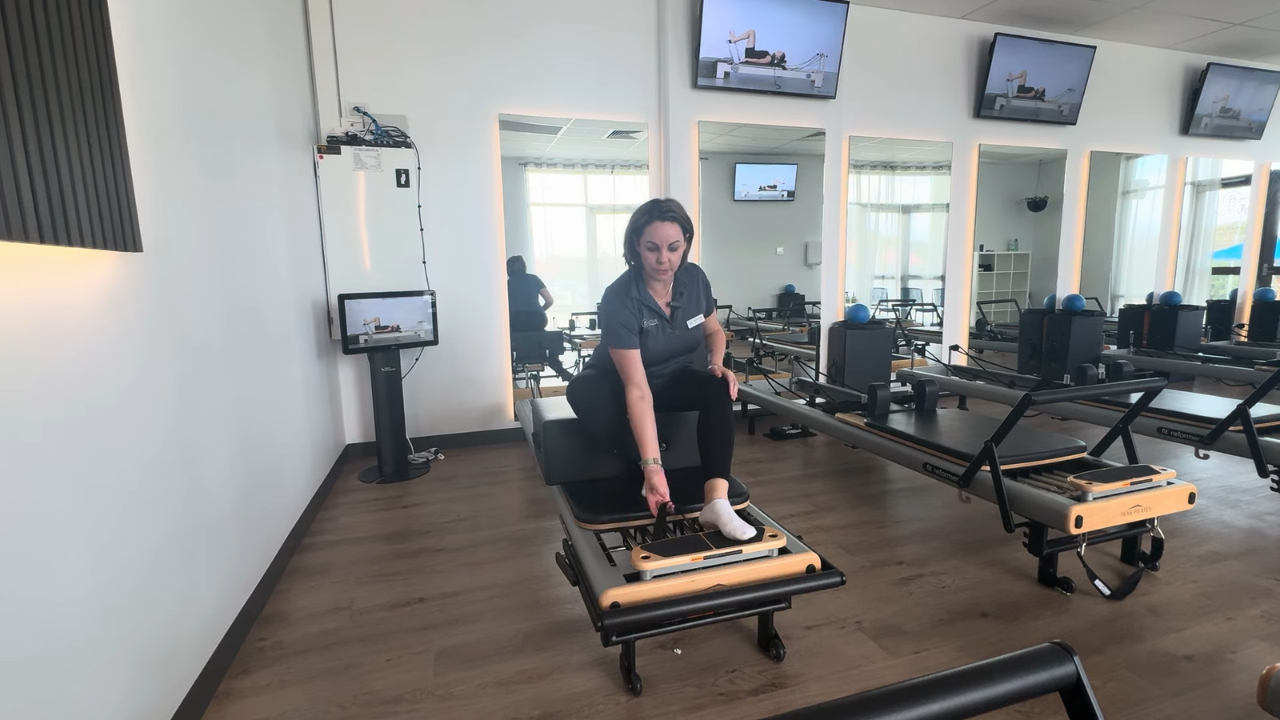
Austin classes last 40 minutes, and a new one starts every 45 minutes, according to CultureMap Austin. That leaves about five minutes for one group to leave and the next to set up.
At my old studio, the minutes before the first exercise were busy. A beginner would stand beside the machine unsure whether the straps went on the hands or the feet, and someone would walk over before a single spring was clipped.
Reformer springs do not work in a straight line. In footwork, heavier springs add load to the legs. In many stability exercises, a lighter spring lets the carriage slide more freely, so the trunk and shoulders work harder to hold it.
Regulars learn that quickly. A first-timer copying the screen may not, and a video will never notice your legs negotiating with you mid-set.
What the Research Says About Being Watched
I could not find a published study comparing screen-led and instructor-led Reformer classes. The closest evidence comes from strength training. A 2022 systematic review in the International Journal of Strength and Conditioning pooled 12 studies and found a moderate strength advantage for supervised training, with almost no difference in body composition.
The authors called much of the evidence imprecise, so treat it as a hint rather than proof. Teachers have raised concerns too. In a 2023 article for Pilates Association Australia, one instructor described video-led classes of up to 20 people, every level doing one workout, and a 15-minute briefing in place of a beginner class.
The Guardian also reported in April 2026 that the largely unregulated Reformer boom in the UK has been linked to inexperienced instruction and injuries.
Who Might Do Fine With a Screen
I do not think screen classes are automatically a bad idea. Price keeps plenty of people away from the Reformer, and I have written before about why one Reformer class can cost as much as dinner out. A $5 class removes that barrier.
The format suits some people better than others.
- Regulars who already know their spring settings and footbar height.
- People adding extra sessions between instructor-led classes.
- Anyone whose schedule only fits a 6 a.m. or 9 p.m. slot.
- Confident movers who modify on their own and skip what feels wrong.
It suits fewer people who are pregnant, recovering from an injury, or managing back pain. Those readers need someone who can assess them, and a physical therapist or doctor is the right first stop.
What to Check Before Your First Screen Class
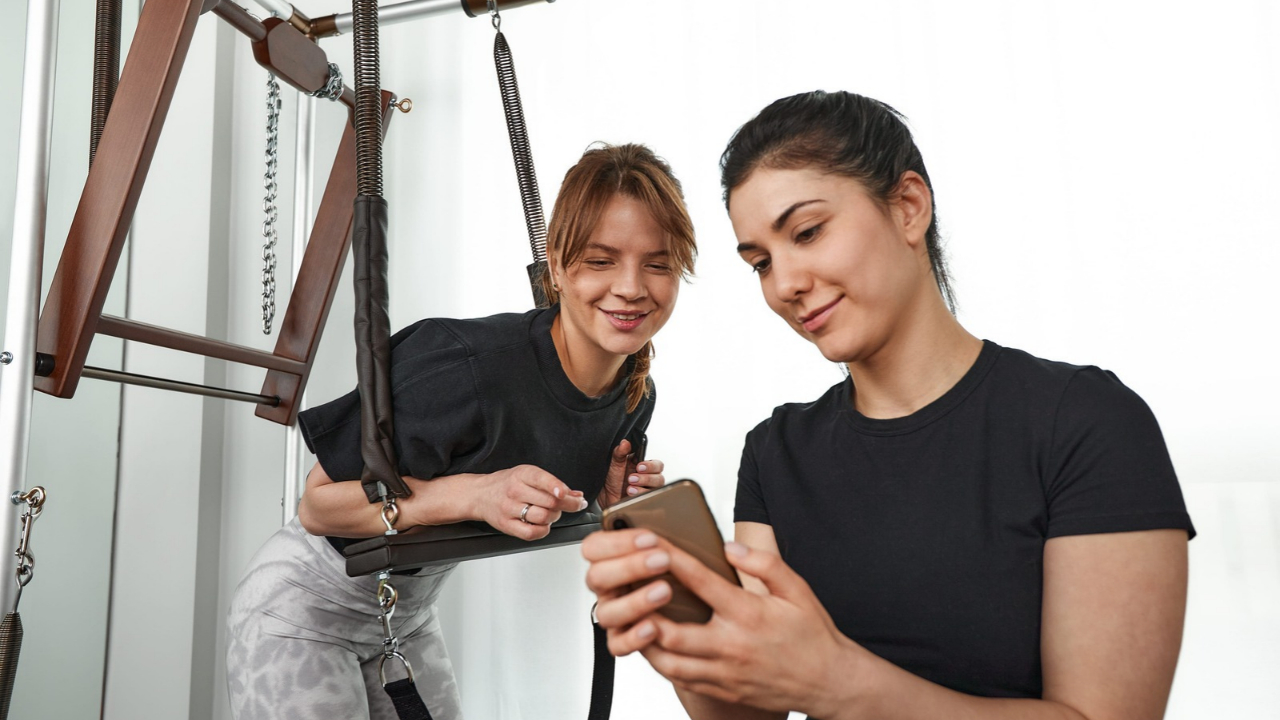
Take the induction seriously, even if you have done Reformer before. If you are brand new, a few instructor-led sessions will make the screen far more useful, and it helps to know how the carriage, springs, and footbar work before you clip in. A screen can show the right spring setting, but it cannot tell you that you clipped the wrong one.
- Ask whether trained staff are on site during classes or only at induction.
- Stay at the beginner level for a few weeks, even when it feels slow.
- Learn the spring colors and settings before class starts.
- Choose the easier option whenever the harder one feels shaky.
- Check the springs, straps, and headrest before the video begins.
Where Screen Studios Go From Here
Pronto now has studios in Austin and Plano, and its 1,000-studio goal is still only a plan.
How far the format spreads in the US will depend on how many first-timers walk in without knowing what a spring does.
My view is that the screen makes a decent substitute for a playlist and a poor substitute for a teacher who can see you. If cost keeps you off the Reformer, a screen studio is worth a look once you know the machine.
Spend your first few sessions with a person in the room, then let the video count your reps.