
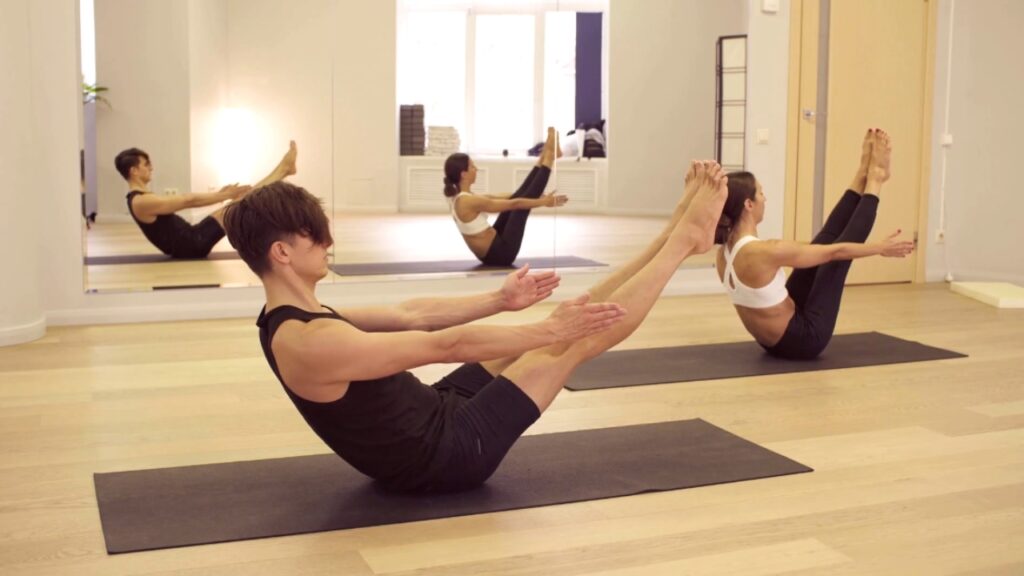
You have probably noticed that yoga classes are mostly women. From the front of the room, it is hard to miss, and the men who do come tend to pick the back corner mat, as if it comes with an emergency exit.
The CDC has now put numbers on it. In its latest national survey on yoga, 23.3% of American women had done yoga in the past year, compared with 10.3% of men, which makes women more than twice as likely to practice.
Studios have noticed too, and some are changing their classes and the way they talk about yoga to get more men through the door.
So what do the numbers actually say?
The figures come from the National Health Interview Survey, which the CDC’s National Center for Health Statistics runs.
- 16.9% of adults did yoga in the past 12 months.
- That splits into 23.3% of women and 10.3% of men.
- Adults aged 18 to 44 were the most likely group at 21.3%, dropping to 8.0% for people 65 and older. So if you are 30 and telling yourself you will start when things calm down, the survey would like a word.
- Households at 400% of the federal poverty level or higher reached 23.0%, against 10.4% in the lowest income group.
Nobody needs expensive leggings to start, but the survey suggests the people with the bigger budgets are the ones turning up.
So the gap between men and women sits right next to an age gap and an income gap. Yoga is not evenly spread across everyone.
Twice the rate does not mean twice the students
Two numbers get tossed around, and they answer different questions. The CDC figure is a rate: the share of women who practice compared with the share of men.
The 2016 Yoga in America study from Yoga Journal and Yoga Alliance counted who was actually on the mats instead, and found women made up 72% of US practitioners and men 28%.
View this post on Instagram
The two fit together nicely, because a rate about 2.3 times higher for women naturally gives you a class list that is mostly women. Just remember the 2016 study is ten years old and used a different method, so treat it as a rough cross-check, not today’s picture.
Once they are on the mat, everyone wants similar things
The CDC also asked people who do yoga why they do it. I expected bigger differences, and honestly the answers are closer than the participation gap would suggest.
Reason
Men
Women
To restore overall health
79.6%
80.2%
Meditation as part of yoga
52.9%
59.3%
To treat or manage pain
31.8%
27.5%
The difference on overall health was too small to count statistically. Women were more likely to include meditation, and men were more likely to use yoga for pain. So once a man is on the mat, his reasons look a lot like everyone else’s.
My own guess, and it is only a guess, is that the hard part is walking into the room the first time, not the class itself. I see this all the time with people new to anything: the first door is always the heaviest.
Is the gap shrinking? Nobody can say yet
Yoga has grown a lot, and the CDC has been counting. Its 2017 report had 14.3% of adults using yoga, up from 9.5% in 2012, with women ahead of men back then too.
The 2022 figure of 16.9% keeps that climb going, and a twenty-year analysis of national survey data found that yoga use rose significantly between 2002 and 2022.
We can’t say yet whether men are catching up. The 2022 report only compares men and women in that one year, so there is no trend to check. What we do know is that more people are doing yoga and women still lead by a wide margin. If someone says the gap is closing, ask to see the numbers.
Why studios care about the other half
Any teacher will tell you a class is easier to fill when more people feel invited. The 2016 study is the last big industry survey I could verify, so read these numbers as background and not as today’s market:
- More than 36 million US practitioners, up from 20.4 million in 2012.
- About $16 billion a year spent on classes, clothing, and equipment, up from $10 billion.
- 34% of Americans said they were somewhat or very likely to try yoga in the next 12 months.
A room that draws mostly one group leaves a lot of curious people who have not turned up yet, and studios would love a few of them to try a class. Ideally, a class where they feel welcome from the first minute.
What studios are actually trying
The clearest recent evidence is a June 2026 Men’s Journal report on ClassPass data. ClassPass named yoga the second most-booked workout on its platform worldwide in 2025, with bookings up 28% year on year, while attendance at heated classes rose more than 39%.
According to data from fitness activity booking app ClassPass, Pilates was the most popular workout worldwide in 2025 for the third year in a row, experiencing a 66 per cent year on year increase. Online studio directory Pilates Studio UK currently lists over 1980 verified studios across the UK, and our Pilates and yoga industry has been valued at £1.1bn (globally, the industry is valued at over $120.9bn).
This rise has been controversial… https://t.co/te4bWTIo9g
— The New Statesman (@NewStatesman) September 1, 2026
CorePower Yoga’s Hot Power Fusion, a heated class that mixes yoga movement, mobility work and athletic sequencing, grew participation by more than 19% in 2025 compared with 2024.
Heat and visible effort feel familiar to people who judge a workout by how much they sweated, and yoga becomes something that sits alongside lifting or running instead of replacing it.
Jeff Bladt, Playlist’s senior vice president of marketplace, told Men’s Journal that yoga and Pilates have historically been marketed more toward women, and that this perception is now shifting. Even the springs and adjustable resistance of reformer pilates can get overshadowed by the image of who takes the class.
A few things these numbers cannot tell you
Before anyone announces that the gap has closed, keep these in mind, because a tidy headline number can hide a lot of untidy detail:
- The CDC figures cover yoga anywhere, so they say nothing about how many men or women attend studios specifically.
- The ClassPass and CorePower growth figures are totals for a platform and a class format, and the published report does not split them by sex.
- The 72% to 28% split comes from a 2016 survey.
- I could not find an announced, coordinated studio campaign to attract men. What exists is class formats and marketing changing studio by studio.
- CDC estimates are self-reported, so they reflect what people remember and choose to say.
- Rates describe groups, not individuals. Plenty of men love yoga and plenty of women never try it.
If you are a man thinking about trying a class
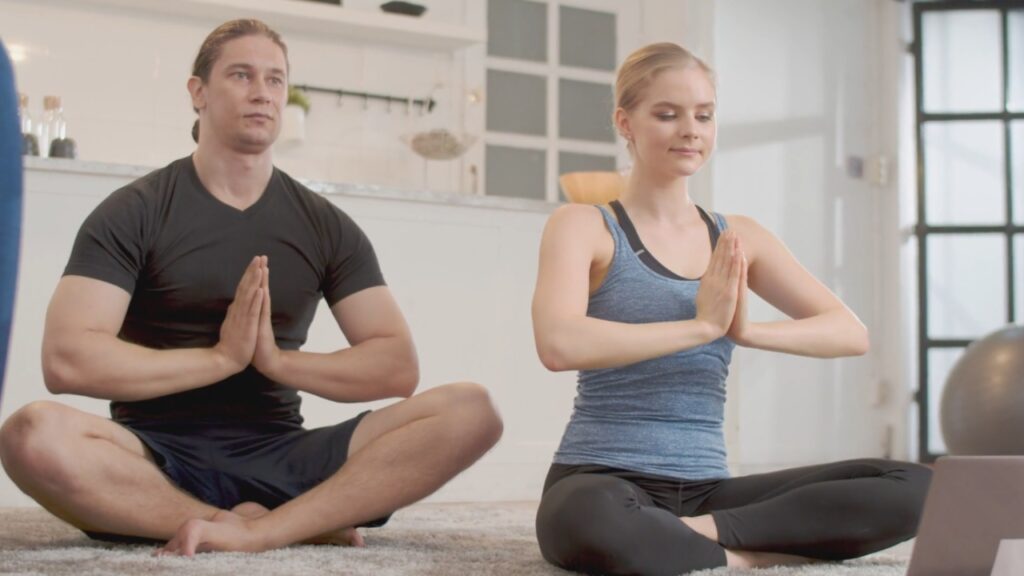
I have taught enough classes to know that “I’m not flexible enough for yoga” is one of the most common reasons people give me for avoiding the exact thing that could help them become more flexible. You do not need to be bendy first. Here is how I would start:
- Pick a beginner or mobility-focused class, or a heated athletic one if that appeals more. Fair warning: my legs usually begin negotiating with me somewhere around the middle.
- Tell the teacher which spots are tight or sore, so they can offer an easier version.
- Try ten minutes at home between classes. Ten minutes has a suspicious habit of turning into twenty once you are already moving.
If you are thinking about yoga for pain, check with your doctor or physiotherapist first. The National Center for Complementary and Integrative Health has a plain overview of what is known about yoga.
What to watch next
The CDC has asked about yoga in 2012, 2017 and 2022, every five years. If that rhythm holds, the next snapshot would land around 2027, though no date has been announced.
That is when we will see whether 23.3% and 10.3% have moved.
Until then, take any claim that studios are closing the gap as a fair guess, not a proven result, and ask for numbers split by sex when someone quotes growth.
If you teach, count who shows up to your own class this month. And if you are the one who has been meaning to try a class for about six months, pick a day this week and book it.